
Roughcasting and harling
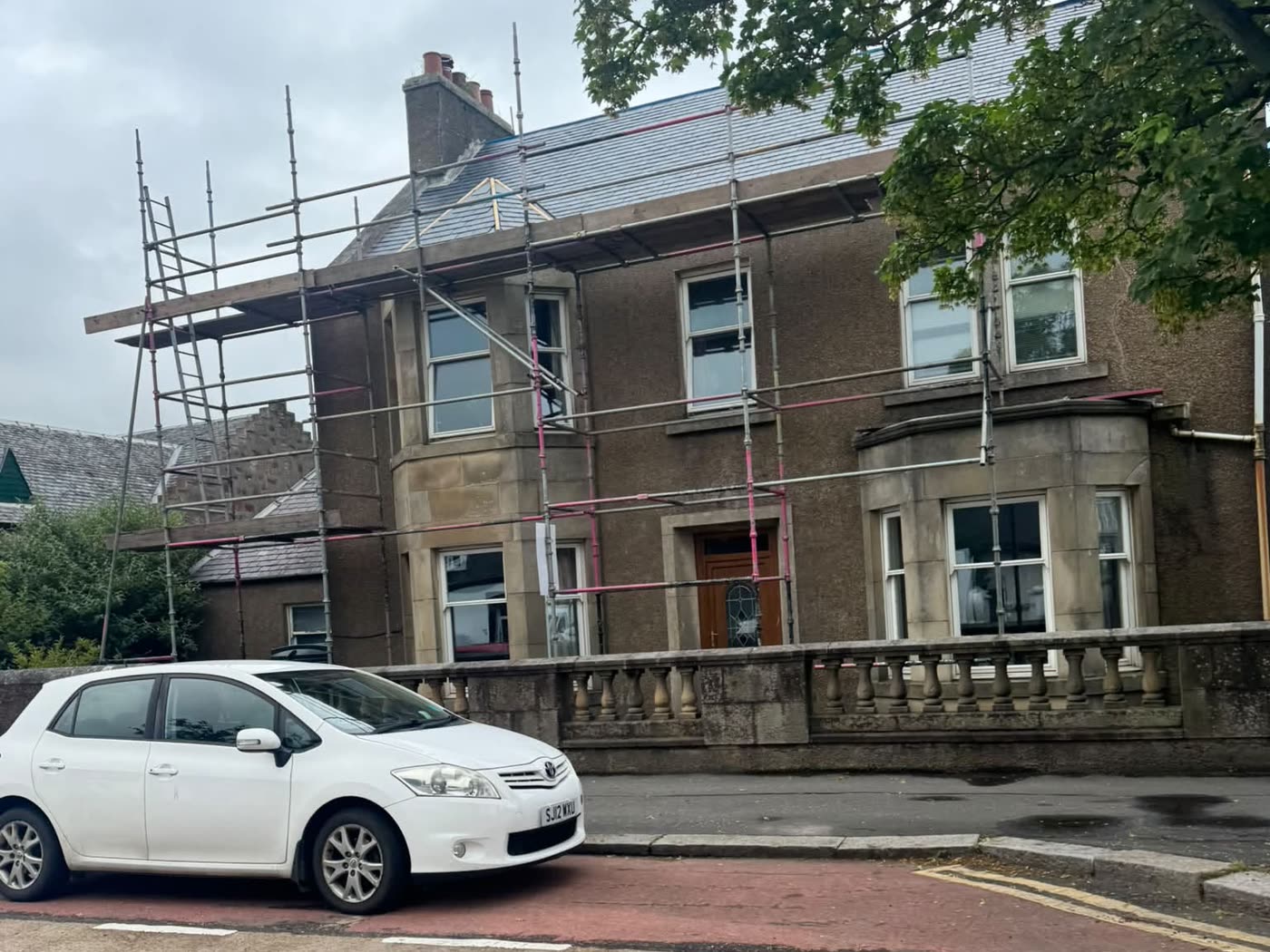
Traditional roughcast and harling, patched or renewed across the elevation.
In short
Roughcasting, also called harling in Scotland, is the render finish used on the majority of Scottish housing to keep driving rain out of a solid wall. It works by shedding water off the surface, so once it cracks or hollows out behind, water gets into the wall and stays there. Repairs are possible in small areas, but where a whole elevation has blown, taking it back and re-casting is the only lasting answer.
You can find a blown area of roughcast by tapping it: sound work rings solid, and anything that has lost its bond sounds hollow. Painting over cracked roughcast is a common false economy, because it seals moisture into the wall rather than keeping it out.
Signs your roughcast needs attention
- Cracks running across the render, especially around openings
- Areas that sound hollow when you tap them
- Roughcast lifting or falling away in patches
- Damp inside on an external wall with no other obvious cause
- Staining or green growth spreading across an elevation
- Previous patch repairs that stand out in colour or texture
What the job involves
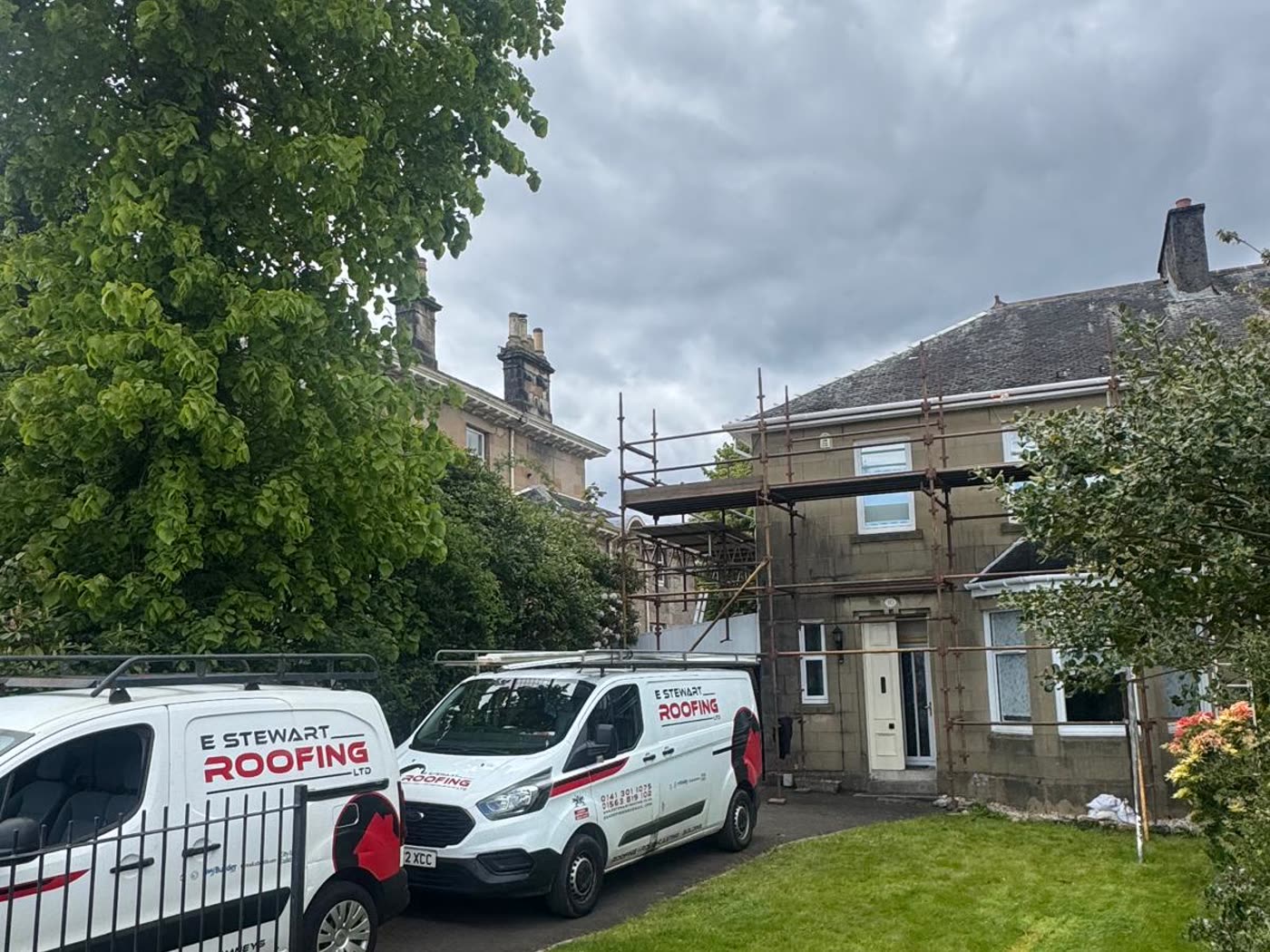
Every roof is different, but the shape of the work is usually the same. Here is how a typical roughcasting and harling job runs.
Sound the wall
The elevation is tapped over to find everything that has lost its bond, not just the parts that have already fallen off.
Take back to sound work
Blown material is hacked off back to a solid edge, so the new work has something to key into.
Make good the background
The wall behind is checked and made good, and any cracks in the masonry are dealt with before anything goes over the top.
Base coat and cast
A base coat goes on, then the roughcast is thrown to match the existing texture as closely as possible.
Finish and protect
Edges and reveals are cut in, and the work is protected while it cures rather than being left to a hard frost or full sun.
Want someone to take a look?
Call 07464 695657 or send a photo on WhatsApp and you will get a straight answer on what it needs.
Roughcasting and harling near you
E Stewart Roofing Ltd covers Glasgow, Ayrshire and the west of Scotland. Pick your area for local detail, or call 07464 695657 if you are not sure whether you are in range.
Frequently asked questions
What is the difference between roughcast and harling?
In practice they refer to the same thing: a wet mix thrown onto the wall to give a textured, weather-shedding finish. Harling is the older Scottish term and roughcasting is the one most people use day to day.
Can roughcast be patched or does the whole wall need doing?
Small areas can be patched, and it is the sensible thing to do where the rest of the elevation is sound. The trade-off is that a patch rarely matches perfectly in texture and colour, so where a large proportion has blown, doing the whole elevation gives a much better result.
Why has my roughcast cracked?
Usually movement, water getting in behind it, or a mix that was too strong for the wall underneath. A strong cement render on a soft traditional wall will crack because the wall moves and the render will not.
Can you paint roughcast?
Yes, with a breathable masonry paint. What causes problems is painting over cracked or blown render with a non-breathable coating, which traps moisture in the wall and makes the damp worse rather than better.
What time of year can roughcasting be done?
It needs reasonable conditions to cure, so it is not done in a hard frost or in driving rain. Spring through autumn is the natural window in Scotland, though sheltered elevations can often be worked on outside that.