
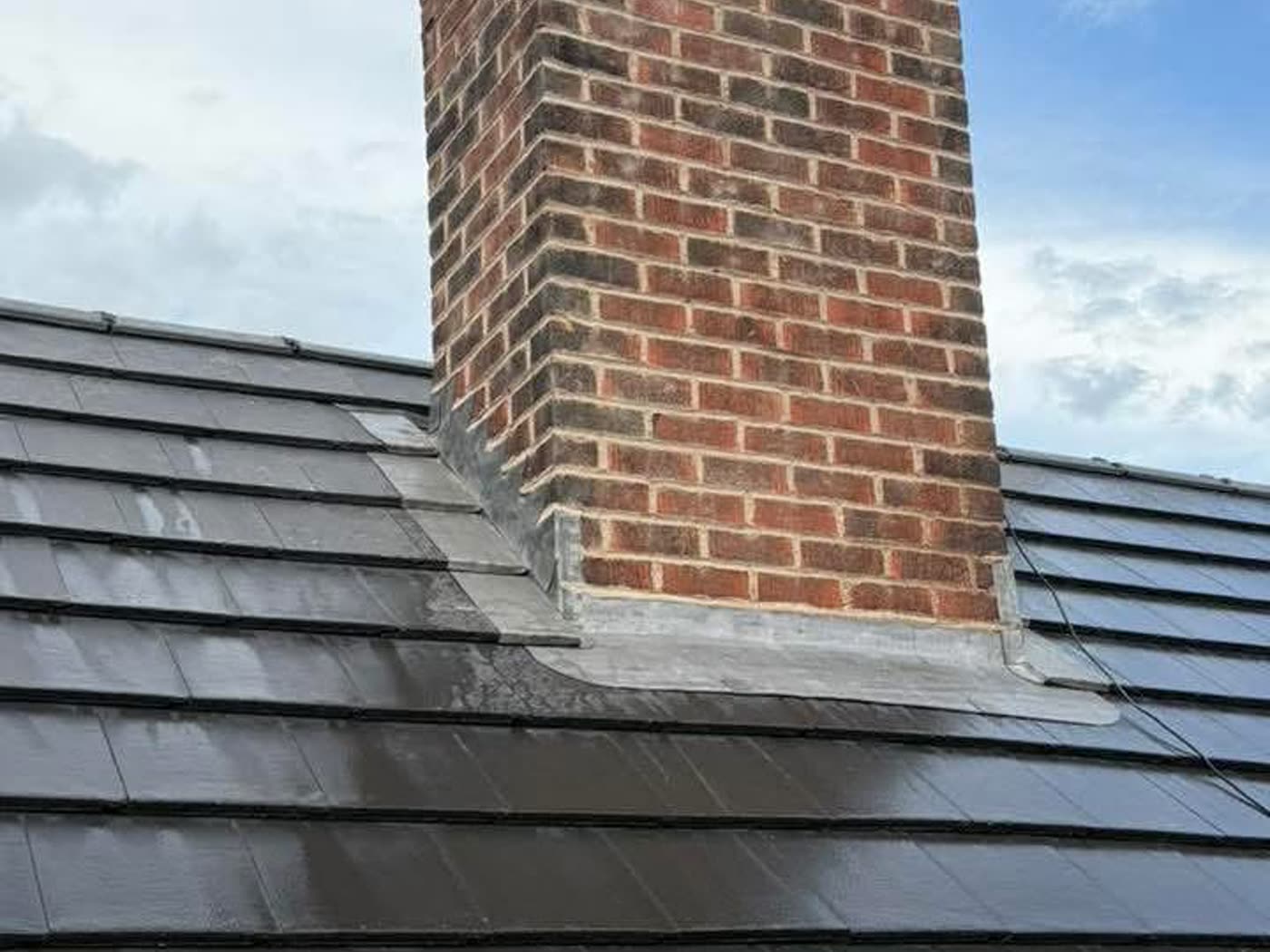
Leadwork and lead flashing
Valleys, soakers, stepped flashings and abutments, dressed properly.
In short
Leadwork is what keeps water out wherever a roof meets something else: a chimney, a gable wall, a dormer cheek, a valley between two slopes. Lead is used because it moves with the building and lasts for decades, but only if it is sized and fixed correctly. Overlong sheets crack from thermal movement, and lead laid without the right welts, clips and chases will fail long before the roof around it does.
Lead is the detail people cannot see from the ground and the one that most often lets a roof down. A lot of what we take off has been done in cement, in the wrong code of lead, or in sheets far too long, all of which crack within a few winters.
Signs your leadwork has failed
- Splits or cracks running across a flashing or valley
- Cement fillets used where lead should be
- Lead that has lifted away from the wall or pulled out of the joint
- Staining or damp on the wall directly below an abutment
- A valley that has been patched with sealant or flashing tape
- Lead sheets that are visibly rippled or buckled
What the job involves
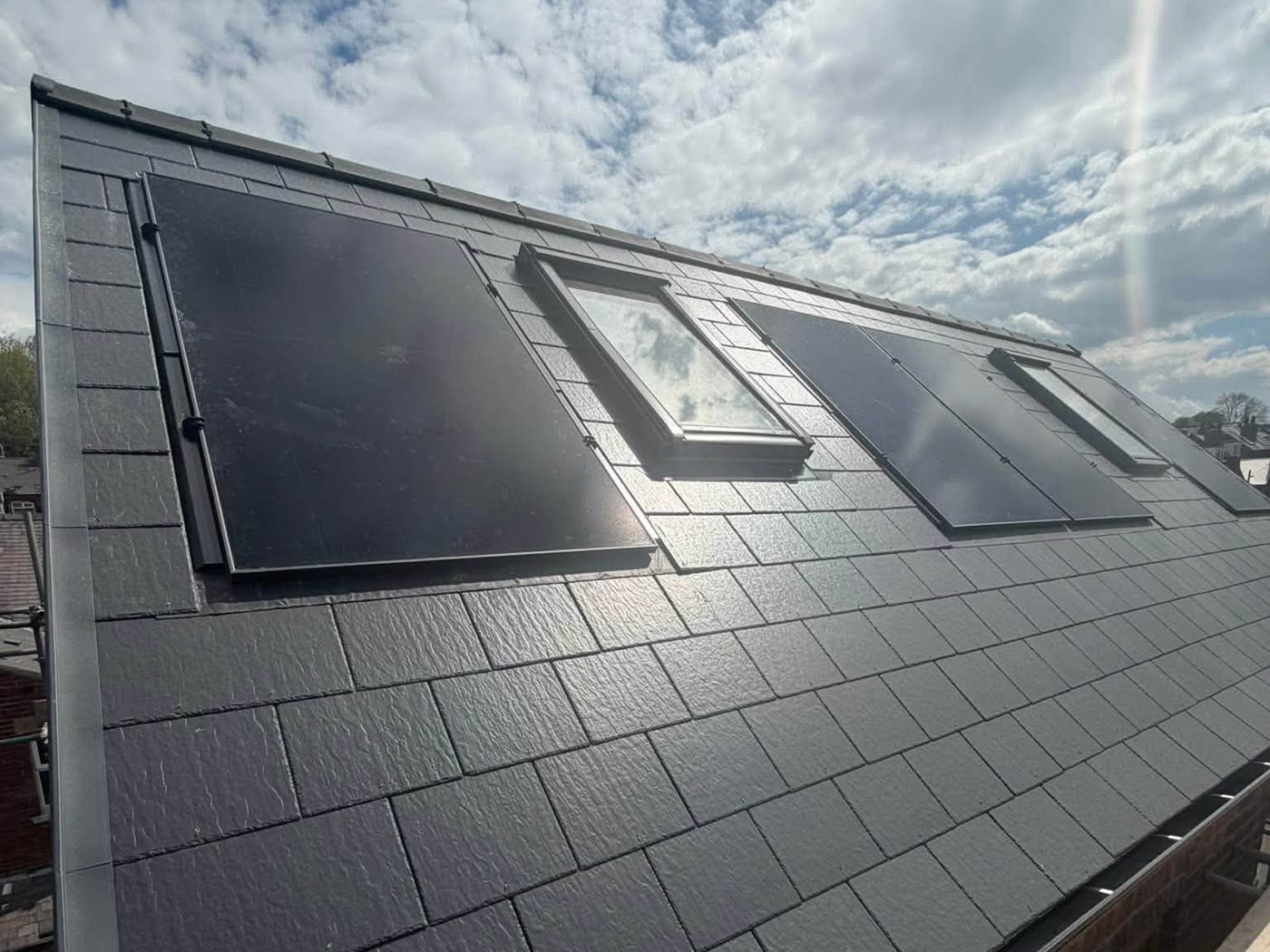
Every roof is different, but the shape of the work is usually the same. Here is how a typical leadwork and lead flashing job runs.
Work out why it failed
Most failed lead has failed for a reason, usually sheets that are too long or the wrong code. There is no point replacing it the same way.
Strip out the old detail
Old lead and any cement fillets are cut out, and the chase in the masonry is cleaned back so the new work can be fixed into it properly.
Size it correctly
Lead is cut to sensible lengths with the right code for the job, so it can move without splitting.
Dress and fix
Lead is dressed to shape, welted where it needs to be, and wedged and pointed into the chase rather than relying on sealant.
Check the run-off
The finished detail is checked so water is genuinely being thrown clear of the joint rather than tracking behind it.
Want someone to take a look?
Call 07464 695657 or send a photo on WhatsApp and you will get a straight answer on what it needs.
Leadwork and lead flashing near you
E Stewart Roofing Ltd covers Glasgow, Ayrshire and the west of Scotland. Pick your area for local detail, or call 07464 695657 if you are not sure whether you are in range.
Frequently asked questions
How long should leadwork last?
Correctly sized and fixed lead should outlast most of the roof around it and run for many decades. Lead that fails within a few years has nearly always been laid in sheets that are too long, in too thin a code, or bedded in cement.
Can lead flashing be repaired or does it need replacing?
A single small split can sometimes be dressed and patched, but if lead is cracking it is usually because it was wrong to begin with, and patching leaves the same fault in place. Replacing the run properly is normally the better spend.
What is a soaker?
A soaker is a small piece of lead that sits under each course of slate or tile where the roof meets a wall, working with the stepped flashing over the top of it. Soakers are hidden once the roof is finished, which is exactly why they get left out by people cutting corners.
Is lead still allowed on roofs?
Yes. Lead remains the standard material for roof flashings and valleys in the UK, and there is no restriction on using it in this way. It is durable, fully recyclable and, fitted correctly, still the best answer for these details.
Why has someone used cement instead of lead on my roof?
Because it is quicker and cheaper to do. A cement fillet looks acceptable when it is new and cracks within a few winters, at which point it channels water into the joint it was supposed to protect.