
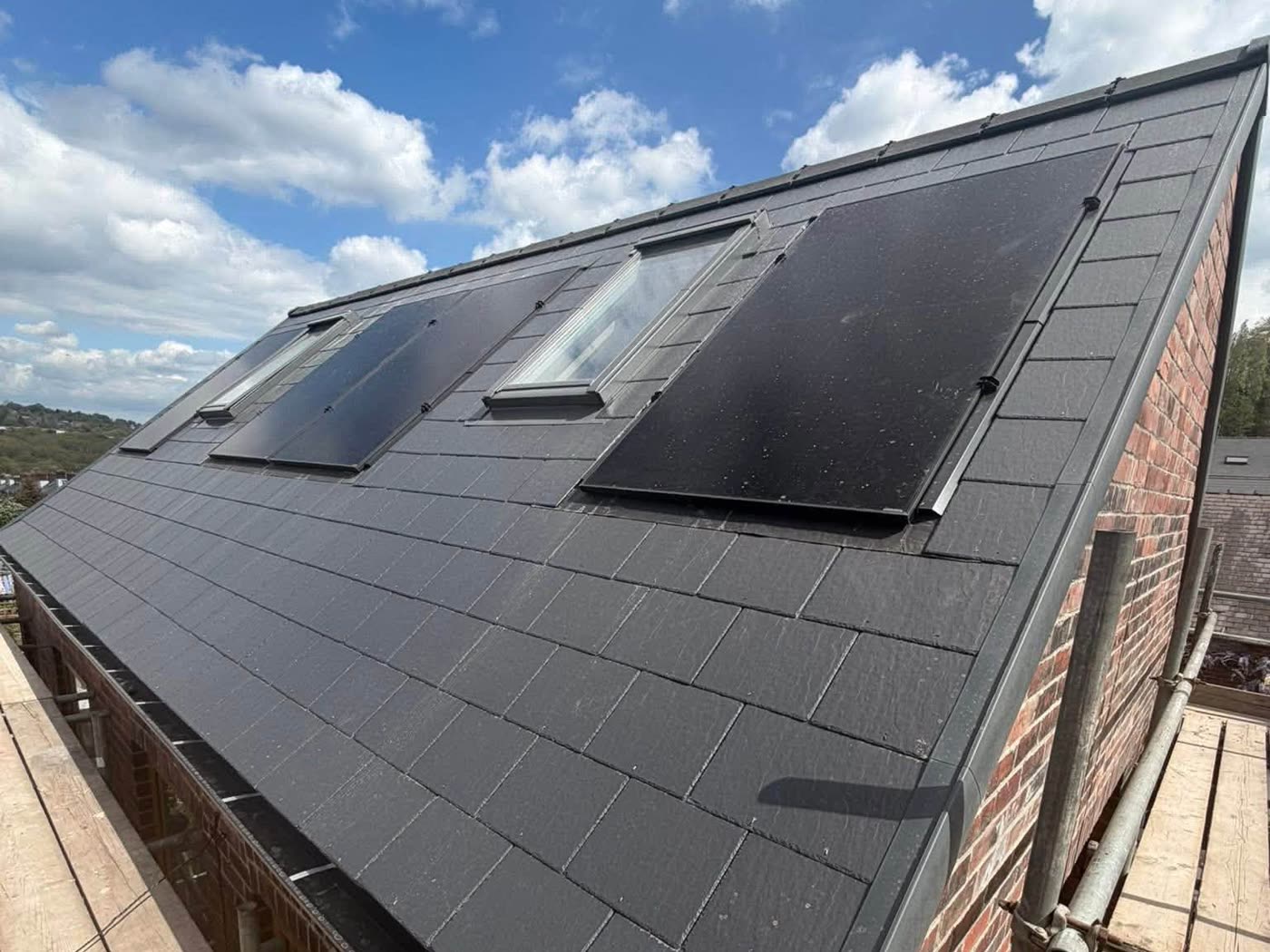
Dry ridge and dry verge systems
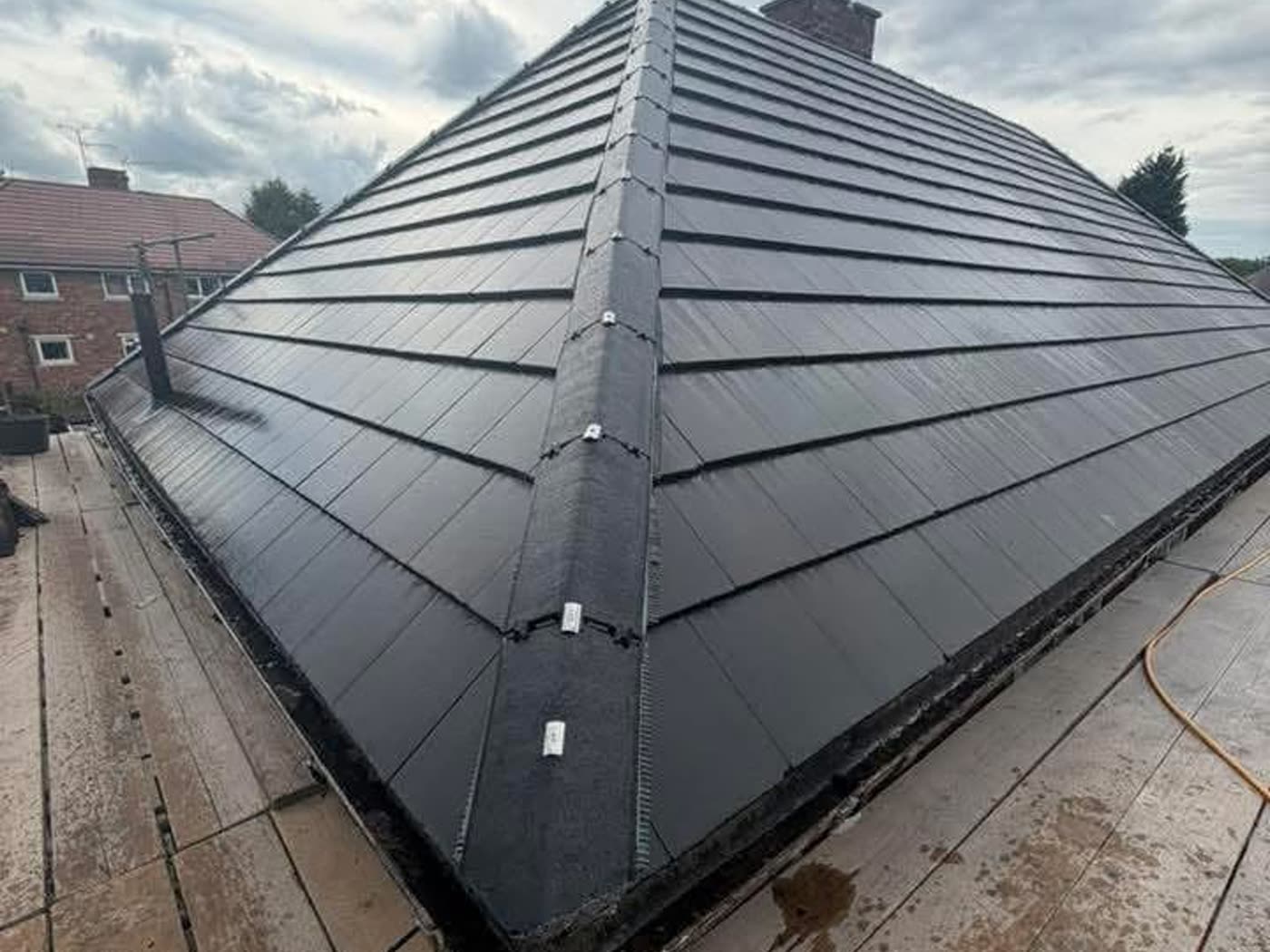
Mechanically fixed ridges and verges that do not rely on mortar.
In short
A dry ridge system fixes ridge and hip tiles mechanically with clamps and screws instead of bedding them in mortar. Mortar on an exposed ridge cracks and washes out over time, which is why loose ridge tiles are one of the most common storm callouts. A dry system also ventilates the roof space along the ridge, which helps with condensation in the loft. It is now standard practice on new work and a common upgrade on older roofs.
If your ridge tiles were bedded in mortar twenty or more years ago, they are probably at or near the end of their life. It is worth dealing with before a gale deals with it for you, because a ridge tile coming off a two storey roof is dangerous as well as expensive.
Signs your ridge needs re-doing
- Mortar visibly cracked or missing along the ridge line
- Ridge tiles that rock or shift when the roof is walked
- Pieces of mortar in the gutter or on the ground
- Ridge tiles out of alignment after a storm
- Damp or condensation showing in the loft near the ridge
- Previous repointing of the ridge that has already cracked again
What the job involves
Every roof is different, but the shape of the work is usually the same. Here is how a typical dry ridge and dry verge systems job runs.
Lift the existing ridge
Old ridge tiles are lifted and the old mortar bedding is cleaned off. Sound tiles are kept where they are worth reusing.
Fit the ridge batten
A batten runs the length of the ridge, fixed down into the structure, giving the system something solid to clamp to.
Lay the ventilated roll
The ridge roll seals the gap under the tiles against wind-driven rain and snow while still letting the roof space breathe.
Clamp and screw
Each ridge tile is mechanically fixed with a clamp and screw, so it is held rather than glued.
Finish the ends
The ends of the run are closed off properly so wind cannot get underneath and start lifting the run.
Want someone to take a look?
Call 07464 695657 or send a photo on WhatsApp and you will get a straight answer on what it needs.
Dry ridge and dry verge systems near you
E Stewart Roofing Ltd covers Glasgow, Ayrshire and the west of Scotland. Pick your area for local detail, or call 07464 695657 if you are not sure whether you are in range.
Frequently asked questions
Is a dry ridge better than mortar?
For durability and for wind resistance, yes. Mortar relies on a rigid bond that eventually cracks under thermal movement and weather. A mechanical fixing does not, and it adds ventilation along the ridge as a bonus.
Can a dry ridge be fitted to an existing roof?
Yes. It is one of the most common upgrades on an older roof, and it does not require re-covering the whole thing. The ridge is lifted, the system goes in, and the tiles go back down mechanically fixed.
Will it look different?
Barely. The tiles sit in the same place and look the same from the ground. The visible difference is that the mortar line is replaced by a neat closure under the tile edge.
Does a dry ridge help with condensation?
It helps. Ridge ventilation lets warm moist air out at the top of the roof space, which is where it collects. It is not a complete answer on its own if the loft has other ventilation or insulation problems.
How long does a dry ridge take to fit?
On a typical house it is usually a day or so, depending on the length of the ridge and any hips, and on access.