
Flat roofing
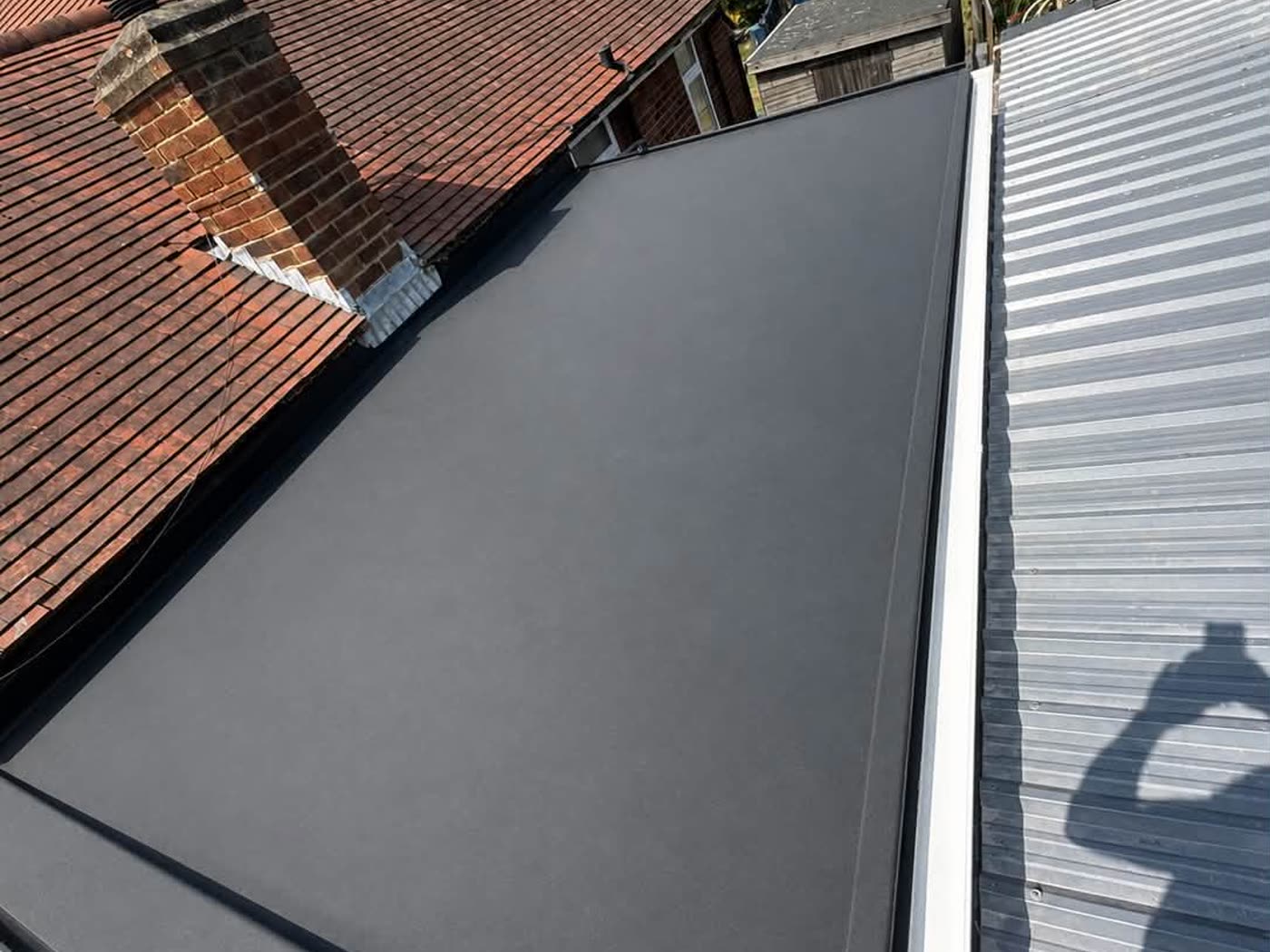
Extensions, dormers, garages and porches covered in modern membrane.
In short
Modern flat roofing has moved a long way from the felt that gave flat roofs their reputation. A single ply rubber membrane goes down as one sheet across the whole deck, so there are no joints in the field of the roof to open up, and it stays flexible through Scottish temperature swings instead of going brittle. Fitted onto a sound, properly falling deck, a flat roof is not the weak point people assume it is.
Almost every failed flat roof comes down to one of three things: standing water because the falls were never right, a seam that has opened up, or an edge detail that was never properly formed. Fixing the covering without fixing the cause just resets the clock.
Signs a flat roof needs replacing
- Water lying on the roof for days after rain rather than draining away
- Blistering, bubbling or splitting across the surface
- Felt that has gone brittle, or chippings washed into bare patches
- Damp showing on the ceiling below, usually near an edge or an upstand
- Ponding around the outlet because the fall runs the wrong way
- Edge trims lifting, or the upstand pulling away from the wall
What the job involves
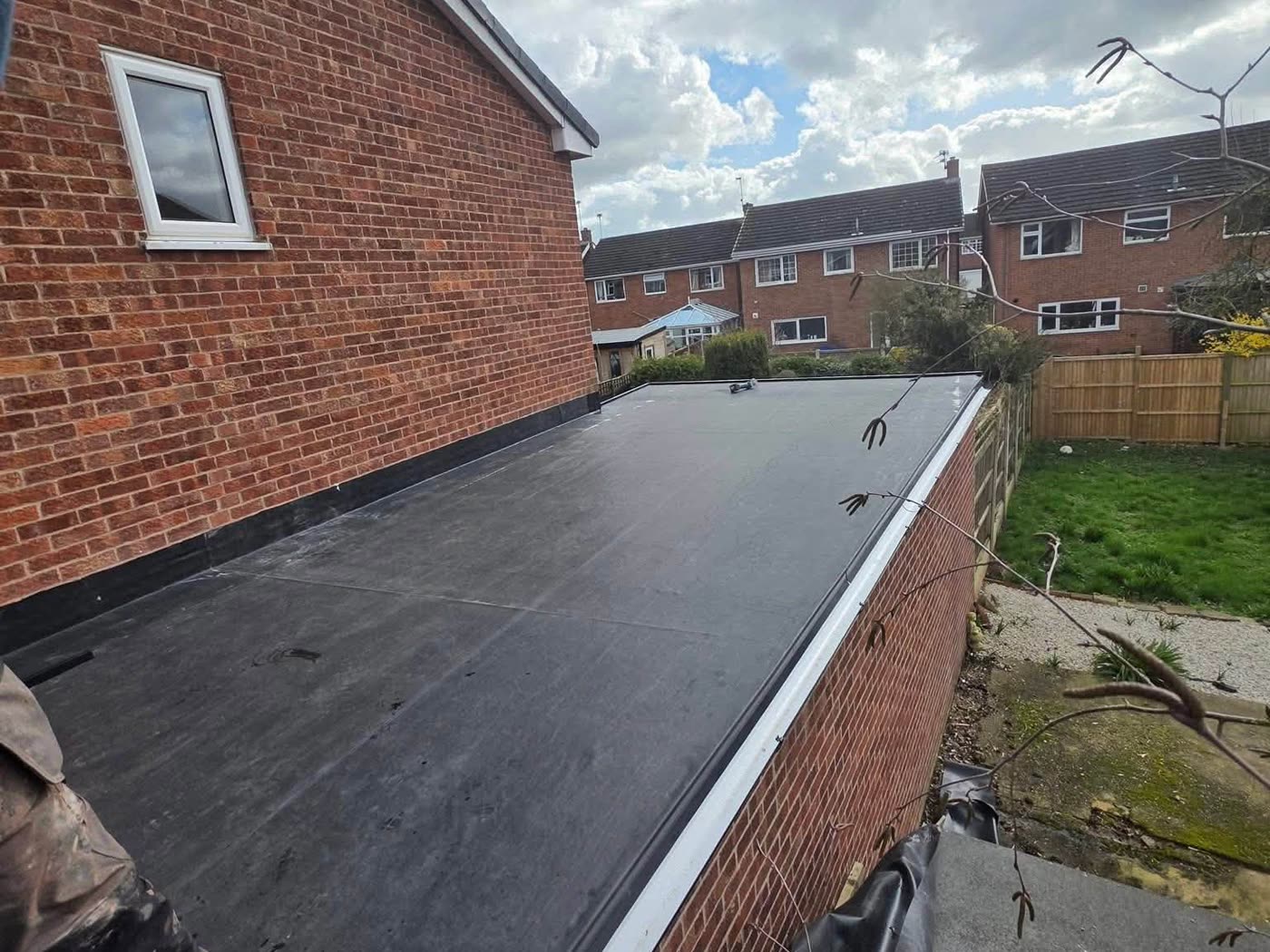
Every roof is different, but the shape of the work is usually the same. Here is how a typical flat roofing job runs.
Check the deck, not just the covering
The old covering comes off so the deck underneath can be inspected. Soft or rotten boards are replaced, because a new membrane over a failed deck will not last.
Get the falls right
Firrings are adjusted or added where needed so water actually runs to the outlet instead of sitting in the middle of the roof.
Lay the membrane
The membrane is laid and bonded as a single sheet across the field of the roof, so there are no joints where the water sits.
Form the edges and upstands
Trims, drips and upstands are formed properly and dressed into the wall, because that is where flat roofs almost always fail.
Rainwater and hand over
Outlets and downpipes are connected up and the roof is checked with water before we leave.
Want someone to take a look?
Call 07464 695657 or send a photo on WhatsApp and you will get a straight answer on what it needs.
Flat roofing near you
E Stewart Roofing Ltd covers Glasgow, Ayrshire and the west of Scotland. Pick your area for local detail, or call 07464 695657 if you are not sure whether you are in range.
Frequently asked questions
How long does a rubber flat roof last?
A properly installed single ply membrane on a sound deck is generally expected to give decades of service rather than the ten or fifteen years people associate with old felt roofs. What shortens it is almost always the deck or the falls underneath, not the membrane.
Can you put a new flat roof over the old one?
Sometimes, but it is usually a false economy. Covering over a wet or rotten deck traps the moisture and the new roof fails early. We take the old covering off so the deck can actually be seen.
Why does water sit on my flat roof?
Because the falls are not steep enough or run the wrong way. A flat roof is never truly flat: it needs a fall to the outlet. Standing water is the single most common reason a flat roof fails early, and it can usually be corrected when the roof is recovered.
Can a flat roof be repaired rather than replaced?
Yes, if the deck is sound and the fault is a split, a seam or an edge detail. If the deck has gone soft underfoot or water has been getting in for a long time, a repair is only buying a little time.
Do you cover dormers and porches as well as extensions?
Yes. Dormers, porches, garages, bay roofs and small link roofs are all flat roofing work, and the small ones often matter most because they sit directly above a room you use.