
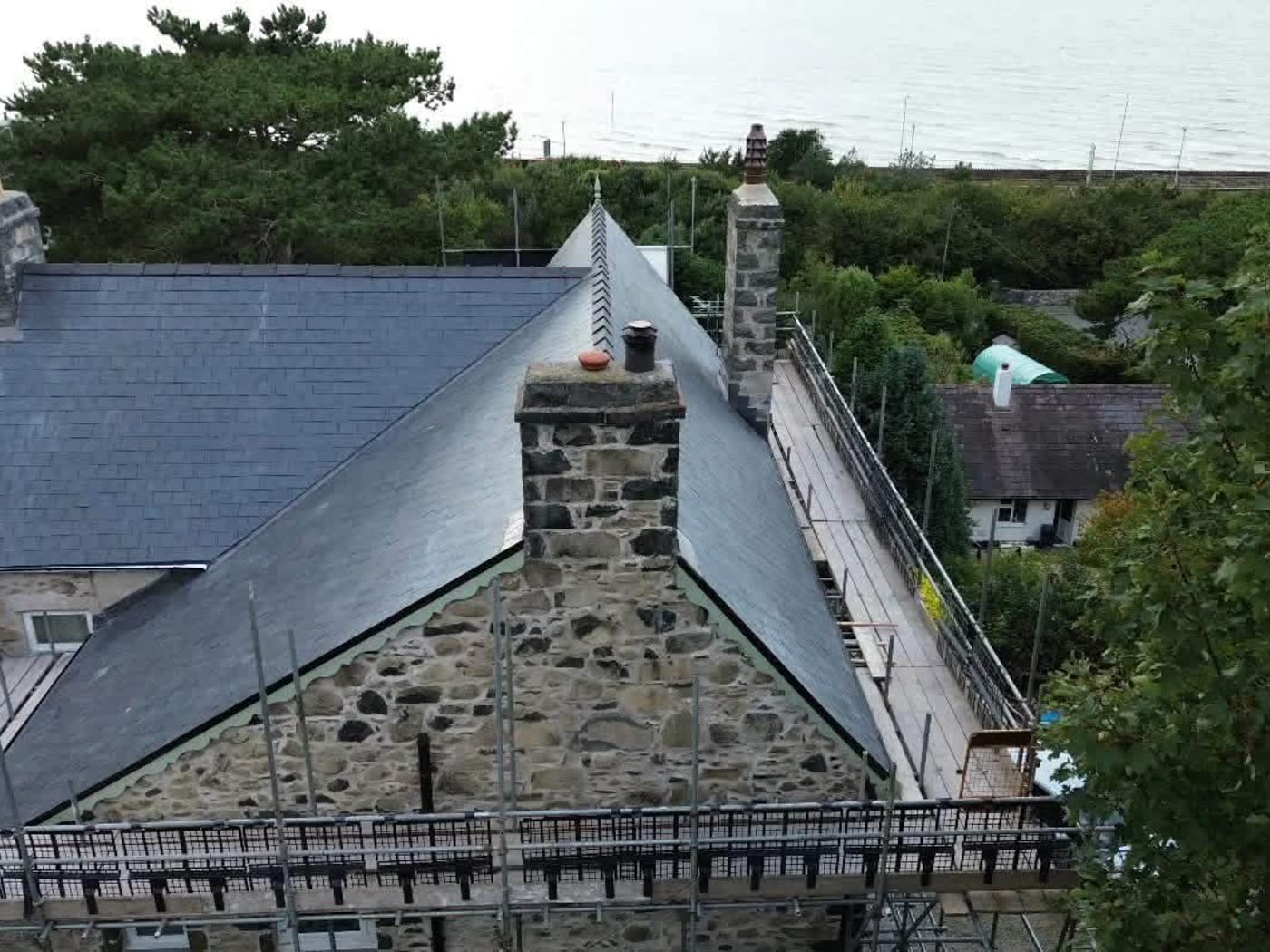
Chimney repairs and rebuilds
Repointing, rebuilds, flaunching and lead flashings on the stack.
In short
A chimney is the most exposed masonry on the building, taking weather from every side with no roof over it, so it deteriorates faster than the rest of the house. Most chimney work is repointing eroded joints, renewing the flaunching that holds the pots, and replacing lead flashings where the stack meets the roof. Where the brickwork or stonework has gone too far, the stack is rebuilt from a sound course upwards.
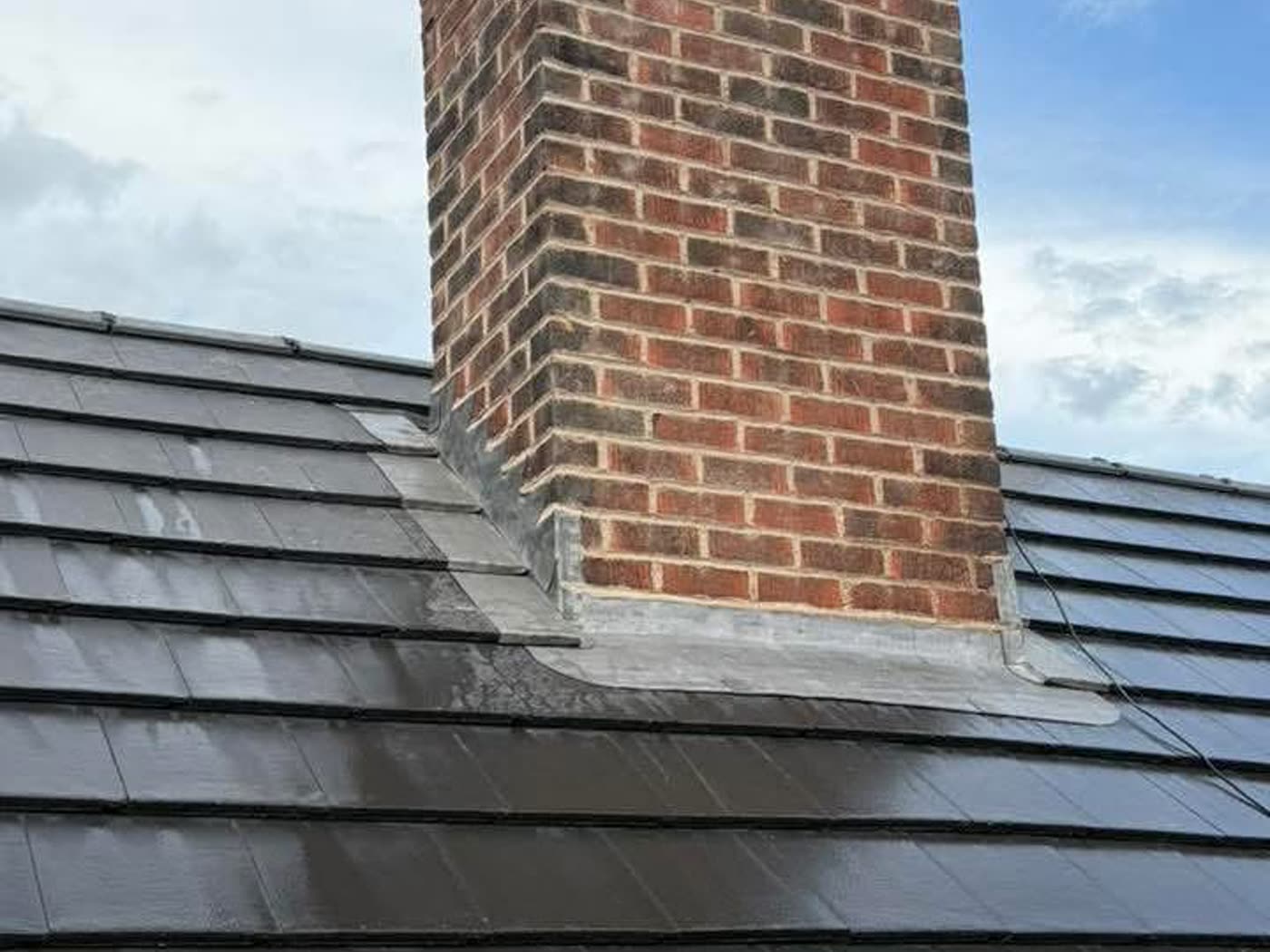
Damp on a chimney breast is nearly always blamed on the pot or the flue, but it usually starts at the flashing where the stack passes through the roof. Cement fillets that have cracked are a particularly common culprit on older Scottish property, because cement moves differently from stone and always loses.
Signs your chimney needs attention
- Damp patches on the chimney breast inside, often upstairs
- Mortar joints eroded back so the bricks or stones stand proud
- Cracked or missing flaunching around the base of the pots
- A cement fillet at the roof line that has cracked away from the stack
- Vegetation growing out of the stack
- A stack that looks out of plumb or has movement cracks
What the job involves
Every roof is different, but the shape of the work is usually the same. Here is how a typical chimney repairs and rebuilds job runs.
Inspect the whole stack
The stack is looked at from the roof rather than the ground, including the flashings, the flaunching and the pots.
Rake out and repoint
Failed joints are raked out to a proper depth and repointed in a mortar suited to the masonry, not just skimmed over.
Renew the flaunching
The flaunching is cut off and re-formed so it sheds water away from the pots instead of holding it against them.
Replace the lead work
Cement fillets are removed and replaced with proper lead soakers and stepped flashings, chased into the joints and wedged.
Rebuild where needed
Where the masonry has gone beyond repointing, the stack is taken down to a sound course and rebuilt, reusing the original stone or brick where it is worth keeping.
Want someone to take a look?
Call 07464 695657 or send a photo on WhatsApp and you will get a straight answer on what it needs.
Chimney repairs and rebuilds near you
E Stewart Roofing Ltd covers Glasgow, Ayrshire and the west of Scotland. Pick your area for local detail, or call 07464 695657 if you are not sure whether you are in range.
Frequently asked questions
Why is my chimney breast damp?
Most often because the flashing where the stack meets the roof has failed, or because the masonry itself is so porous that it is soaking through. An old cement fillet cracking away from the stack is one of the most common causes on Scottish property, and it is a straightforward fix.
Should a cement fillet be replaced with lead?
Yes, wherever possible. Cement fillets crack because cement and masonry move at different rates, and once cracked they funnel water straight into the stack. Lead soakers and a stepped flashing move with the building and last far longer.
Can you take a chimney down instead of repairing it?
Yes, where a stack is redundant it can be taken down and the roof made good over it. It is worth thinking it through first, because stacks are part of the look of traditional property and removing one is not easily undone.
Do I need a chimney repaired if I never use the fire?
Yes. A disused stack still takes the same weather, and it still lets water into the building when the flashing or the flaunching fails. Capping the pots while leaving ventilation is often sensible on a stack that is no longer in use.
How long does chimney work take?
Repointing and flashing work on a single stack is often a day or two once access is sorted. A full rebuild takes longer and needs scaffolding, and the weather has to be reasonable because new mortar cannot be laid in a hard frost.